Manufacturing Execution System
Manufacturing Execution System
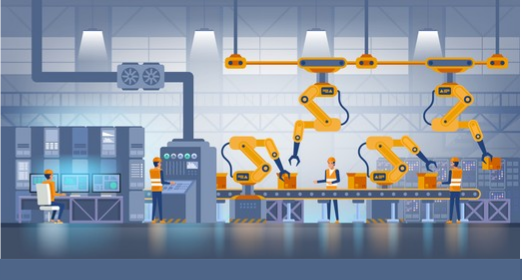
A Manufacturing Execution System (MES) is the operational layer that connects a company's production plans with what is actually happening on the factory floor.
While an ERP system manages business processes such as purchasing, sales, inventory, accounting, and production planning, an MES focuses on the execution and control of manufacturing operations. It provides production teams with the information, tools, and workflows they need to manufacture products efficiently, consistently, and according to defined standards.
For manufacturers, the distinction is important. Knowing that an order needs to be produced is one thing. Knowing what is currently being produced, which machine or workstation is being used, what materials have been consumed, how much has been produced, what has failed quality inspection, how long the operation took, and what remains to be completed is the role of manufacturing execution.
Real-Time Operational View
An MES provides a real-time operational view of production.
It connects production orders and manufacturing plans with the activities taking place on the factory floor. Depending on the manufacturing environment, this can include:
-
Production order management
-
Work order management
-
Work center and workstation management
-
Bill of Materials (BoM) control
-
Material consumption and component tracking
-
Production quantity tracking
-
Work-in-progress (WIP) tracking
-
Quality inspections
-
Machine and operator activity
-
Production time tracking
-
Scrap and waste recording
-
Downtime tracking
-
Maintenance coordination
-
Traceability and lot/serial number tracking
-
Production costing
-
Production performance reporting
The objective is not simply to record production after it has happened. A properly implemented MES should help the organization control and understand production while it is happening.
From Production Plan to Finished Product
A manufacturing process normally begins long before an operator starts a machine.
A customer order, forecast, minimum stock requirement, or replenishment rule creates a demand for a product. The organization then determines what needs to be manufactured, which materials are required, which operations must be performed, and which resources are available.
An MES sits at the point where this plan becomes physical production. For example, consider a manufacturer producing a finished product from several raw materials. The process may look like this:
Sales Demand → Production Planning → Manufacturing Order → Material Availability → Work Orders → Production → Quality Control → Finished Goods → Inventory
An MES provides visibility across this chain. Instead of production information being distributed across spreadsheets, paper production sheets, WhatsApp messages, machine operators' notebooks, and separate inventory records, the organization has a structured system for recording production activities.
Production Orders and Work Orders
A manufacturing order defines what needs to be produced. A work order defines how and where the work will be performed. A single manufacturing order may contain several operations. For example:
Manufacturing Order
Product: Industrial Water Pump
Quantity: 100 Units
Operations:
- Cutting
- Machining
- Welding
- Surface Treatment
- Assembly
- Testing
- Packaging
Each operation may be performed at a different work center and may have different requirements. An MES allows production managers to see the status of each operation rather than simply seeing that the overall manufacturing order is "in progress." This distinction becomes particularly important in environments where production involves multiple work centers and substantial work-in-progress.
Work Centers and the Factory Floor
Work centers represent the resources where manufacturing operations take place. A work center may be:
- A machine
- A production line
- An assembly station
- A workshop
- A processing area
- A testing station
- A packaging station
The system can associate operations with specific work centers and provide information about their availability and workload.
For example:
| Work Center | Current Operation | Status |
|---|---|---|
| Cutting Machine 01 | Steel cutting | Done |
| CNC Machine 02 | Component machining | Ready |
| Welding Station 01 | Frame welding | Available |
| Assembly Line 01 | Final assembly | Waiting |
| Testing Station | Quality testing | Waiting |
This gives production management a much clearer picture of factory capacity and bottlenecks.
Material Consumption
Manufacturing execution is closely connected to inventory. A production order may require:
- Raw materials
- Components
- Packaging materials
- Consumables
- Intermediate products
The MES records the materials required for production and, depending on the manufacturing process, can record their actual consumption. This creates an important connection between the production floor and inventory. For example, if a production order requires:
- 500 kg of raw material
- 100 components
- 50 litres of chemical
- 100 packaging units
The system should be able to determine what has been consumed and what remains. This also helps answer an important operational question:
How much material was actually used to manufacture the product?
That information is essential for inventory control, production costing, variance analysis, and identifying material wastage.
Bill of Materials as the Production Blueprint
The Bill of Materials defines the components required to manufacture a product. However, manufacturing execution goes beyond simply listing components. A manufacturing system can associate the BoM with:
- Manufacturing operations
- Work centers
- Work instructions
- Expected quantities
- Expected production times
- Quality checks
- By-products
- Scrap
- Subassemblies
- Routing information
Quality Control
Quality should not be treated as something that happens only after manufacturing is complete. Quality checks can be integrated directly into production operations. For example:
Machining → Dimensional Inspection → Welding → Visual Inspection → Assembly → Functional Test
If a component fails inspection, the system can record:
- The product
- Production order
- Operation
- Work center
- Operator
- Lot or serial number
- Inspection result
- Failure reason
- Quantity affected
- Corrective action
This creates traceability between the finished product and the manufacturing process that produced it. For regulated or quality-sensitive industries, this information can become particularly valuable.
Scrap and Production Waste
Not everything that enters a production process becomes a finished product. Manufacturing may generate:
- Scrap material
- Defective components
- Production losses
- Damaged products
- Process waste
- Rejected finished goods
A Manufacturing Execution System should allow these quantities to be recorded against the relevant production operation. This provides management with information about production efficiency and material losses.
Traceability
Traceability is one of the most important capabilities of a modern manufacturing system. A manufacturer may need to answer questions such as:
Which raw materials were used to produce this finished product?
or
Which finished products were manufactured using this particular batch of raw material?
Lot and serial number tracking makes this possible. The system can establish relationships between:
Supplier → Raw Material Lot → Production Order → Work Orders → Finished Product → Customer
This is particularly important for industries such as:
- Food and beverage
- Pharmaceuticals
- Chemicals
- Electronics
- Automotive
- Medical devices
- Agriculture and agro-processing
Production Time and Labour
A Manufacturing Execution System can also capture the time spent performing manufacturing operations. For example:
| Operation | Expected | Actual |
|---|---|---|
| Cutting | 2 hours | 2 hours 30 mins |
| Machining | 4 hours | 6 hours |
| Welding | 3 hours | 2 hours |
| Assembly | 5 hours | 6 hours 45 mins |
This allows management to compare planned production times with actual performance. The information can then be used to investigate production variances.
If an operation consistently takes 30% longer than the expected time, the manufacturer may need to examine:
- Machine capacity
- Operator training
- Production methods
- Material quality
- Machine downtime
- BoM assumptions
- Routing times
Ready to transform your business?
Let’s talk about your goals, challenges, and opportunities—and explore how the right ERP solution can help you work smarter, operate more efficiently, and grow with confidence.
Call Us or you can Book A Call